Woody Breast, Variable Texture, and Further-Processed Chicken: What R&D Can Still Control
Woody breast is not a formulation problem by itself. It starts in the raw material, and no further-processing step can fully turn a severely affected fillet into a standard breast texture.
But for R&D, process development, and plant teams, that does not mean texture is out of your hands.
In marinated, injected, tumbled, cooked, sliced, diced, or value-added chicken products, the practical question is narrower: how much texture variation can be reduced before it reaches the customer specification?
FibreYield supports poultry processors as an enzyme supplier for poultry meat tenderizing, with application work focused on controlled protein modification, repeatable plant trials, and scale-up paths that fit high-throughput further-processing environments.
What woody breast changes in the plant
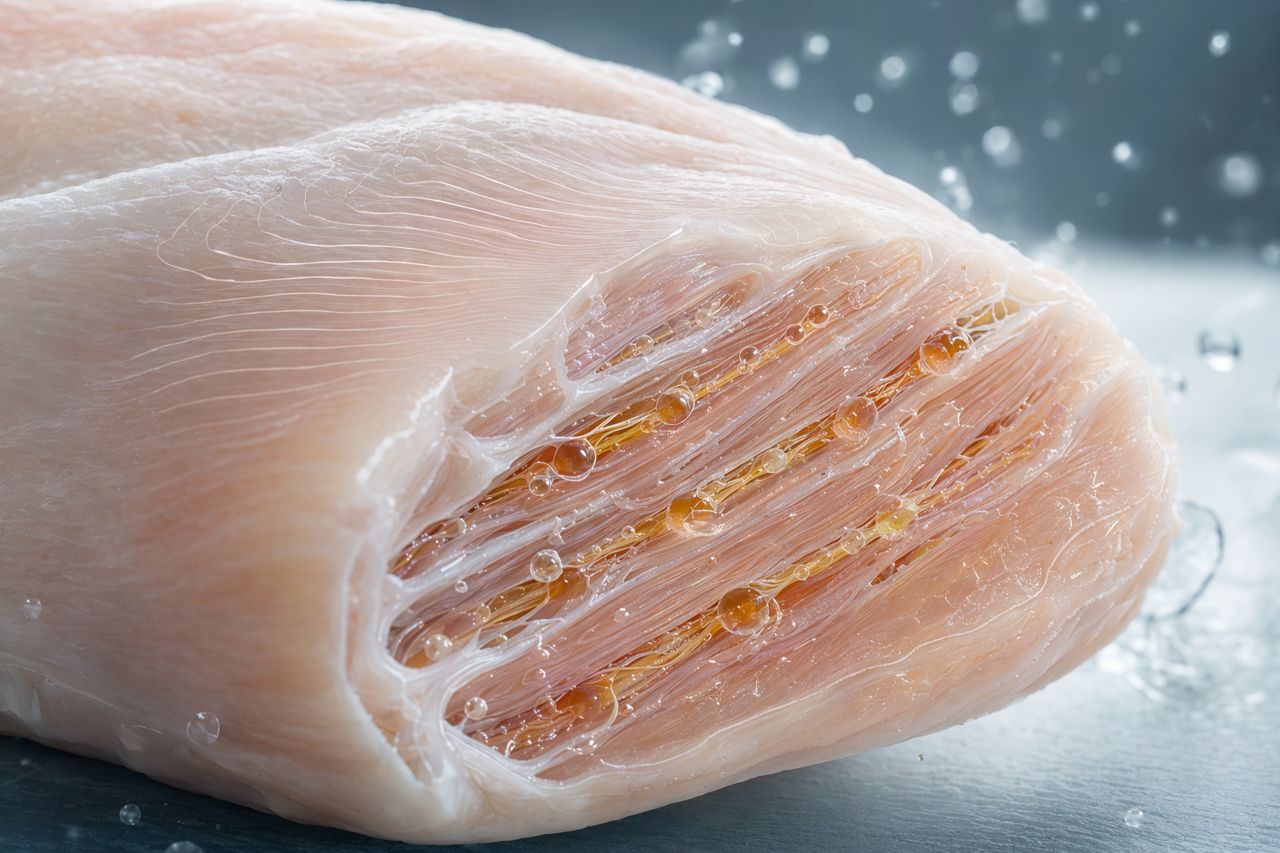
Woody breast brings more than a firm bite. It can affect the whole process window.
R&D teams may see:
- Higher variation in raw fillet firmness
- Reduced marinade uptake consistency
- Uneven brine distribution after injection
- Less predictable tumbler response
- Harder bite in cooked breast products
- Greater texture spread across batches
- Customer complaints even when formulation and cook yield appear in range
The difficult part is that the same incoming load can contain normal, moderate, and severe texture conditions. A plant process built for average raw material may not protect the finished product when that spread widens.
What further-processing can realistically control
A tenderizing enzyme system should not be treated as a shortcut for poor raw material control. It is more useful as one part of a controlled texture-management program.
The controllable areas are usually:
1. Incoming raw material segmentation
If moderate and severe woody breast material are handled identically, the process has to absorb all the variation. Segmentation by supplier, line, visual grade, tactile grade, or instrumental firmness can help R&D define separate process paths.
This does not need to be complex at the start. Even a simple trial design that separates normal, moderate, and severe material can show whether a tenderizing system is providing useful narrowing of texture variation.
2. Brine and enzyme delivery
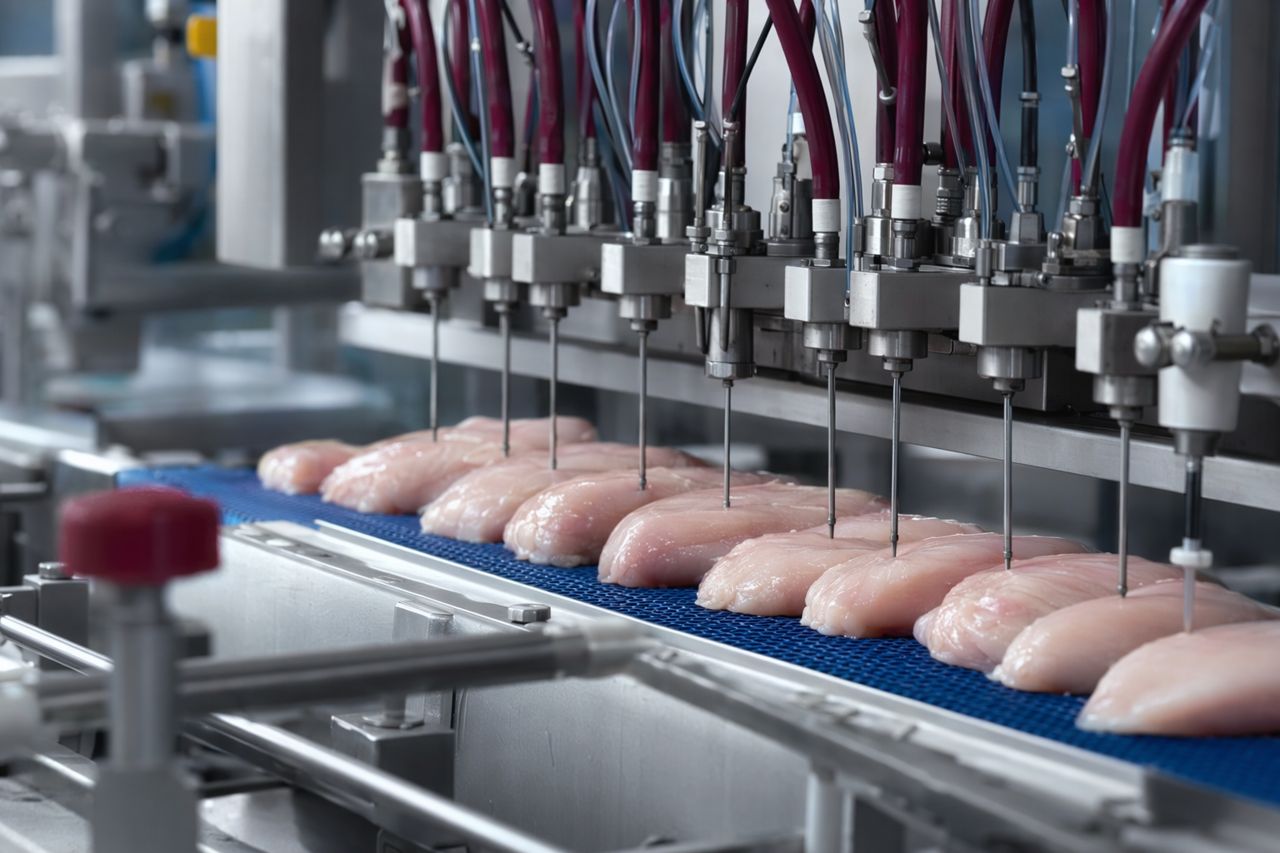
For injected or marinated breast products, enzyme performance depends on contact and distribution. The question is not just which enzyme is used. It is whether the formulation, injection pattern, mixing sequence, and holding conditions allow the system to work evenly.
Key considerations include:
- Brine clarity and compatibility
- Injection coverage across variable fillet geometry
- Pumpability during production runs
- Interaction with salt, phosphate alternatives, starches, fibers, hydrocolloids, flavors, and clean-label components
- Time between injection, tumbling, forming, cooking, or freezing
FibreYield works with processors to evaluate enzyme fit inside the actual process map, not as an isolated bench ingredient.
3. Controlled proteolysis, not over-softening
The target is usually not maximum breakdown. It is controlled tenderness while retaining bite, slice integrity, yield, and product identity.
For further-processed chicken, over-tenderizing can create its own problems:
- Mushy or pasty bite
- Weak slice structure
- Surface tackiness
- Poor portion handling
- Excess purge
- Inconsistent texture after reheating
A well-designed tenderizing approach should move the product toward a defined tenderness target, not simply make it softer.
4. Tumble, dwell, and thermal process alignment
Enzyme systems operate within the process conditions you give them. Tumble time, dwell time, product temperature, cook profile, and time-to-freeze all affect the final texture outcome.
For high-throughput poultry plants, the tenderizing strategy must respect line speed and production reality. A process that works only under slow pilot conditions is not enough.
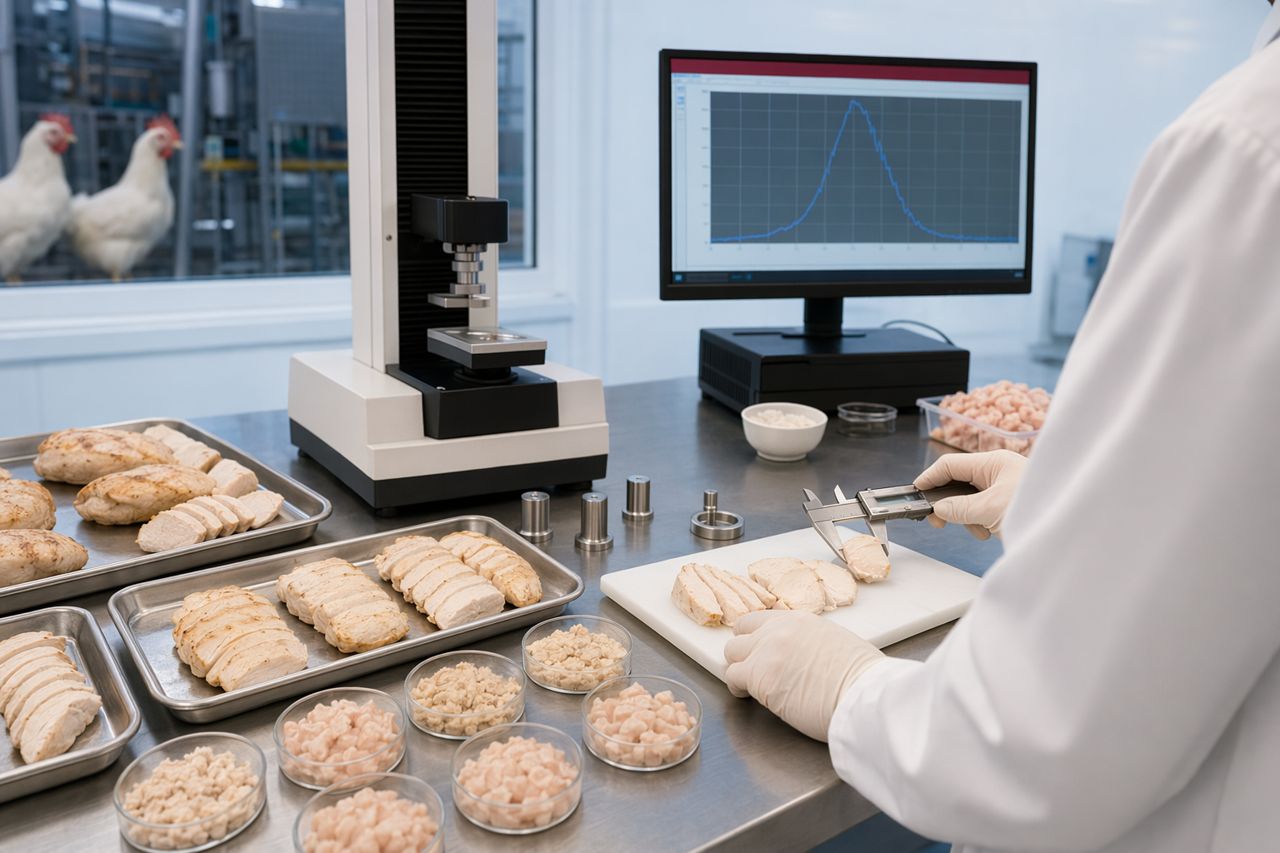
That is why validation should include:
- Plant-relevant batch sizes
- Actual injection or marination equipment
- Normal hold times and shift patterns
- Finished product texture checks
- Yield and purge observations
- Sensory review by trained internal panels
- Repeat runs across different incoming raw material lots
Where enzyme tenderizing can help
In the right application, a poultry tenderizing enzyme system can help reduce the gap between firm raw material and the finished texture target.
Typical use cases include:
- Marinated chicken breast fillets
- Fully cooked sliced chicken breast
- Diced chicken for meal kits or foodservice
- Formed or portioned breast products
- Vacuum-tumbled breast strips
- Value-added chicken products where bite consistency is a customer requirement
The value is not only tenderness. It is process repeatability.
R&D and operations teams are usually looking for a system that can help support:
- More consistent bite across variable lots
- Improved eating quality in moderate woody breast material
- Better alignment between sensory and texture-analysis results
- Less rework caused by out-of-target firmness
- A defined trial path before commercial adoption
- Label and formulation review early in development
Label and customer-spec considerations
Tenderizing systems must be reviewed against the finished product label, market, customer specification, and regulatory framework. Some customers may allow enzyme-assisted processing. Others may require a different declaration strategy or may restrict certain processing aids and functional ingredients.
FibreYield does not treat label review as an afterthought. For B2B projects, the technical discussion should begin with the product standard, target market, and customer expectations, then work backward into the tenderizing process.
A practical validation path for R&D teams
A useful woody breast texture-management trial should answer clear questions before scale-up.
Suggested trial structure
-
Define the texture target
Use sensory language and instrumental texture data that match the customer requirement. -
Segment raw material
Separate normal, moderate, and severe texture groups where possible. -
Map the process
Document injection, marination, tumbling, dwell, cooking, chilling, freezing, and reheating conditions. -
Screen enzyme approach
Compare controlled tenderizing options within the actual formulation constraints. -
Check finished product performance
Evaluate bite, sliceability, purge, yield, appearance, and reheated texture. -
Repeat under plant conditions
Confirm that the result holds across production-relevant lots and line conditions. -
Prepare scale-up guidance
Convert the validated process into clear operating instructions for production and QA teams.
What FibreYield brings to the project
FibreYield is built for industrial enzyme application work in poultry further-processing, not generic ingredient selling.
Our support can include:
- Enzyme system selection for poultry tenderizing
- Formulation and brine compatibility review
- Bench and pilot trial planning
- Plant trial design for injected, marinated, tumbled, cooked, or frozen products
- Texture target development with R&D teams
- Scale-up support for production and QA handoff
- Practical troubleshooting when results vary by lot, shift, or equipment setup
The main point
Woody breast cannot be erased by a single ingredient. But further-processing teams can still control a meaningful part of the finished texture experience.
The best results come from matching raw material segmentation, enzyme selection, brine delivery, time, temperature, and validation data into one process path.
If your team is working on chicken breast texture variation, FibreYield can help evaluate whether a controlled tenderizing system belongs in your process.
Request a quote through the on-site contact form to start a technical review of your poultry application.