Clean-Label Tenderness Expectations in Marinated Poultry: What Buyers Ask and Plants Can Measure
Retail, foodservice, and private-label poultry buyers are asking for a difficult combination: cleaner labels, consistent bite, attractive yield, and stable performance across high-throughput production. For a poultry further-processing plant, the challenge is not simply making chicken feel more tender. The challenge is creating a process that can be specified, validated, repeated, and defended when raw material variability changes.
FibreYield supports processors looking for an enzyme supplier for poultry meat tenderizing with application guidance built around plant realities: injection performance, tumbling behavior, dwell time, cook yield, texture targets, label expectations, and line-scale repeatability.
Why clean-label tenderness is a process question
Clean-label programs often reduce the number of formulation levers available to R&D and process teams. When phosphate reduction, simplified ingredient statements, or customer-specific label restrictions are in play, tenderness can become harder to stabilize.
In marinated poultry, tenderness is influenced by several interacting factors:
- Incoming muscle variability by bird size, portion type, and supplier lot
- Marinade uptake and distribution through injection or vacuum tumbling
- Salt level, pH behavior, and protein functionality
- Dwell time before cooking, freezing, or packaging
- Thermal process severity and moisture loss
- Mechanical action during tumbling and conveying
- Target eating quality for foodservice, retail, or further-prepared applications
An enzyme tenderizing strategy should be evaluated within this full process window, not as a standalone ingredient decision.
What buyers usually mean by “tender”
Buyer language is often sensory. Plant teams need to translate that language into measurable acceptance criteria.
Common buyer expectations include:
- Less firm first bite in breast fillets or strips
- Reduced chewiness after reheating or hot-hold
- More consistent texture across portion size variation
- Moist, fibrous bite without mushy breakdown
- Clean ingredient statement compatible with the product brief
- No visible quality defect linked to over-processing
- Repeatability from pilot trial to full production
The critical point is balance. Tenderness improvement should not compromise slice integrity, coating adhesion, marinade retention, or finished-pack appearance.
What plants can measure before promising a claim
A practical validation plan should connect sensory language with production data. For marinated poultry, useful checkpoints may include:
1. Raw material segmentation
Separate trials by cut, size range, supplier lot, and muscle condition where possible. This helps prevent a positive result on one raw material set from being over-generalized.
2. Marinade pickup and distribution
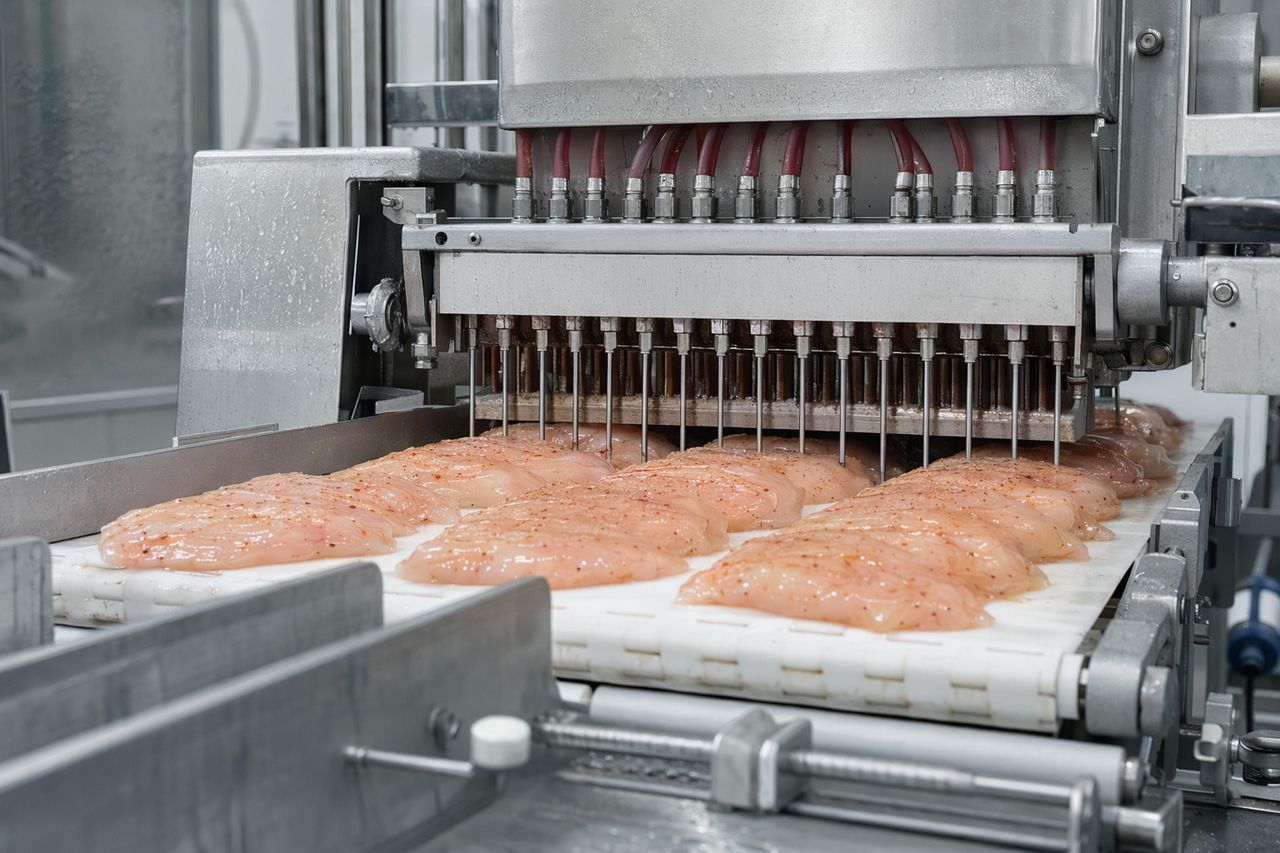
Tenderizing performance depends on whether the solution reaches the muscle structure evenly. Injection pattern, needle condition, brine temperature, vacuum level, and tumbler loading all matter.
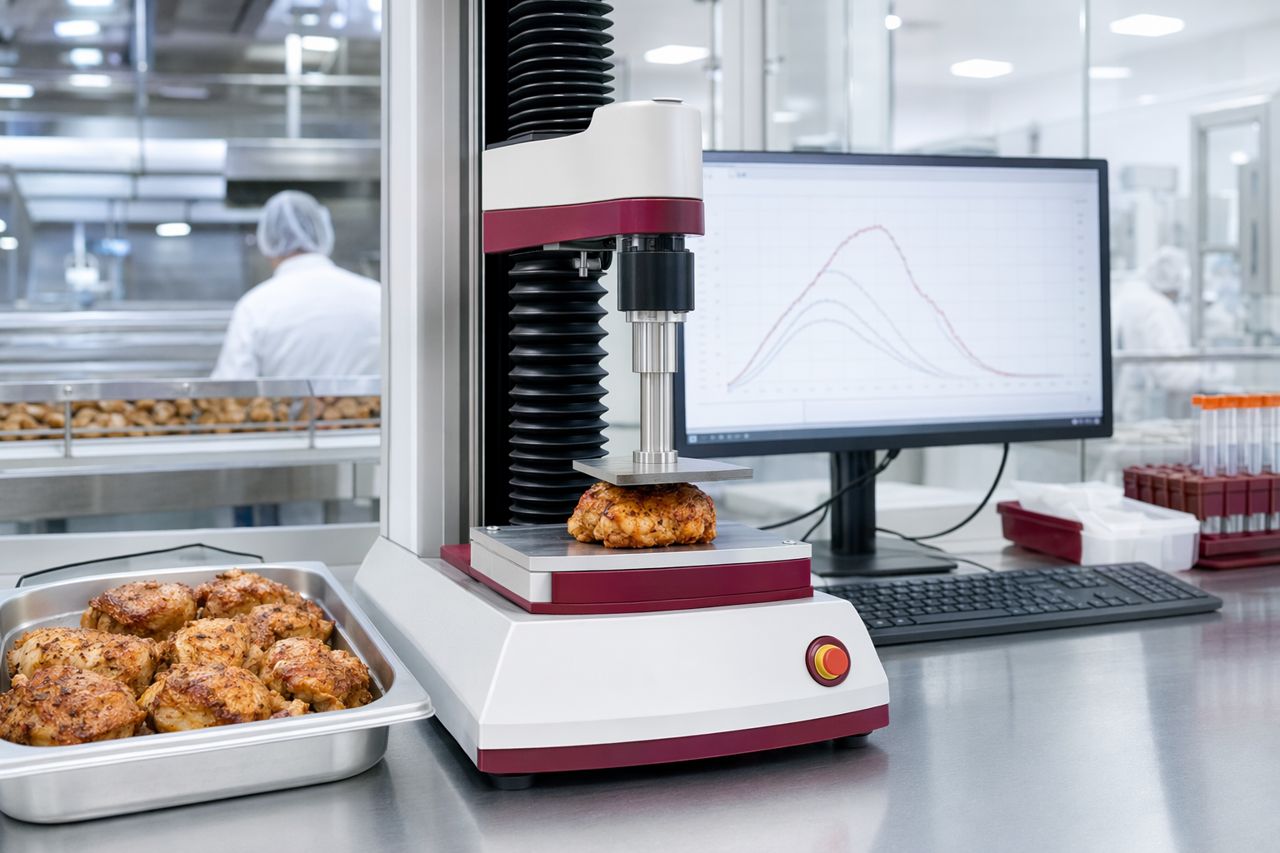
3. Texture profile against a defined target
Plants should define a target band rather than a single ideal number. A target band gives QA and operations a practical way to manage normal production variation while still protecting eating quality.
4. Cook yield and purge behavior
A tender product that loses too much moisture may not meet commercial expectations. Yield, purge, and finished weight control should be measured alongside texture.
5. Visual and handling integrity
Tenderness cannot come at the cost of soft edges, excessive fragmentation, poor portion handling, or reduced compatibility with coating, slicing, skewering, or packing equipment.
6. Shelf-life and process fit
Evaluate the full route: marination, dwell, cooking, chilling, freezing, distribution, and reheating if applicable. Some programs only reveal texture drift after the product has passed through the real commercial pathway.
Where enzymes can fit in a clean-label tenderizing program
Enzyme systems can help processors adjust muscle texture in a targeted way, especially when conventional formulation options are limited. The best fit is usually found through controlled trials that define dosage window, contact time, temperature exposure, and downstream process conditions.
For R&D teams, the objective is to find a reliable process path:
- Noticeable tenderness improvement within the buyer’s sensory language
- Stable performance across normal raw material variation
- Compatibility with the marinade system and label position
- No negative effect on yield, purge, bite integrity, or appearance
- Clear operating limits for production and QA teams
For operations teams, the objective is equally practical: a solution that can be run on existing plant equipment without creating fragile process control or excessive line complexity.
Clean-label does not mean low-control
One risk in clean-label development is treating the ingredient list as the only definition of quality. In poultry further-processing, cleaner labels still require disciplined process control.
A well-designed tenderizing trial should document:
- Formula version and ingredient sequence
- Hydration and mixing procedure
- Injection or tumbling conditions
- Hold time before thermal processing
- Product temperature profile
- Cook schedule and endpoint
- Texture, yield, purge, and sensory results
- Operator observations during handling and packing
This creates a technical record that can support buyer conversations and internal scale-up decisions.
Pilot-to-plant scale-up: what often changes
A bench or pilot result may look promising, then shift at commercial scale. Common causes include larger batch mass, different mixing energy, longer transfer times, variable dwell before cooking, equipment hold-ups, or colder product temperature.
FibreYield helps teams anticipate these shifts by designing trials around scale-up questions from the beginning. The goal is not only to demonstrate that a product can be tenderized. The goal is to define a repeatable operating window that production can own.
Questions to ask before selecting an enzyme supplier
When choosing an enzyme supplier for poultry meat tenderizing, process teams should ask:
- Can the supplier support application trials, not just ingredient shipment?
- Do they understand injection, tumbling, thermal processing, and finished-product handling?
- Can they help define measurable tenderness targets and acceptance bands?
- Will they support clean-label and customer-specific positioning discussions?
- Can they help troubleshoot over-tenderizing, uneven distribution, or texture drift?
- Are recommendations grounded in plant-scale repeatability?
A useful supplier should bring formulation insight and process discipline together.
A practical path for your next tenderness trial
For a poultry further-processing plant, clean-label tenderness should be treated as a controlled development project. Start with a buyer-defined eating-quality target. Convert that target into measurable texture, yield, and handling criteria. Then validate the enzyme system inside the real marinade, equipment, dwell time, and thermal process.
FibreYield works with R&D, QA, and process teams to build trial plans that move from concept to repeatable production conditions.
Planning a clean-label tenderness program for marinated poultry? Request a quote through our on-site form and tell us your cut type, process route, label goals, and target texture profile.