Cook Yield Data Capture on Poultry Further-Processing Lines
Cook yield is one of the most practical signals a poultry further-processing plant can track. It connects marinade uptake, protein functionality, thermal loss, tenderness targets, line discipline, and finished-case economics in one number that operations, R&D, QA, and commercial teams can all understand.
For plants evaluating an enzyme supplier for poultry meat tenderizing, cook yield data is also critical validation evidence. Tenderness improvement alone is not enough. The process has to protect bite quality while staying repeatable under real injection, tumble, chill, and cook conditions.
FibreYield supports enzyme-enabled tenderizing programs with a plant-aware approach: define the target texture, capture the right process data, validate against a control, and scale only when the signal is stable.
Why cook yield deserves tighter measurement
Cook yield is often treated as a routine QC number, but in high-throughput further processing it can reveal process drift early. A small change in injected pickup, muscle temperature, dwell time, tumble energy, belt loading, or cook profile can alter moisture retention and texture.
When an enzyme tenderizing step is part of the formulation, the data has to answer three questions:
- Did the process improve tenderness without over-softening?
- Did the formulation maintain or improve retained yield after cooking?
- Is the result repeatable across raw material variation, shifts, and line speeds?
The best data capture systems are not complicated. They are disciplined, consistent, and close to the line.
Start with the process map, not the spreadsheet
Before building a yield dashboard, map the physical path of the product. The data points should follow the same sequence the chicken follows.
Typical capture points
-
Raw material receipt and trim state
Record cut type, supplier lot, temperature range, trim condition, and hold time. These factors affect pickup, moisture migration, and texture response. -
Pre-injection weight
Use a consistent sampling plan. Avoid mixing skin-on and skinless, different sizing bands, or different trim standards in the same trial set. -
Brine or marinade batch identity
Link every sample to formula version, blend time, temperature, pH range where relevant, and tank age. For enzyme tenderizing programs, formulation identity and use window matter. -
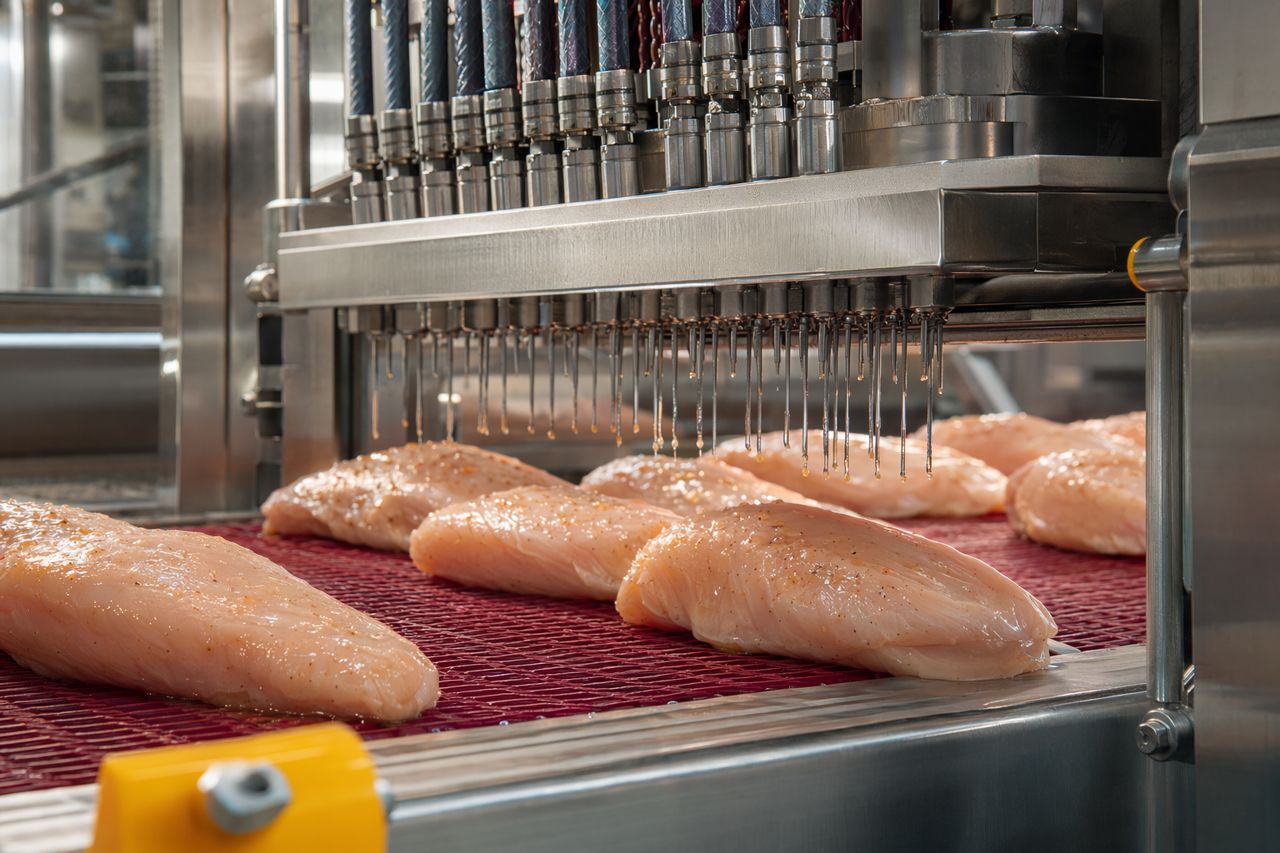
Post-injection pickup
Capture weight after injection and before tumble. This separates injector performance from downstream retention. -
Tumble or massage conditions
Track load size, vacuum setting if used, cycle time, rotation pattern, and product temperature. These parameters influence protein extraction and distribution. -
Pre-cook weight
This shows purge loss or retention before thermal processing. -
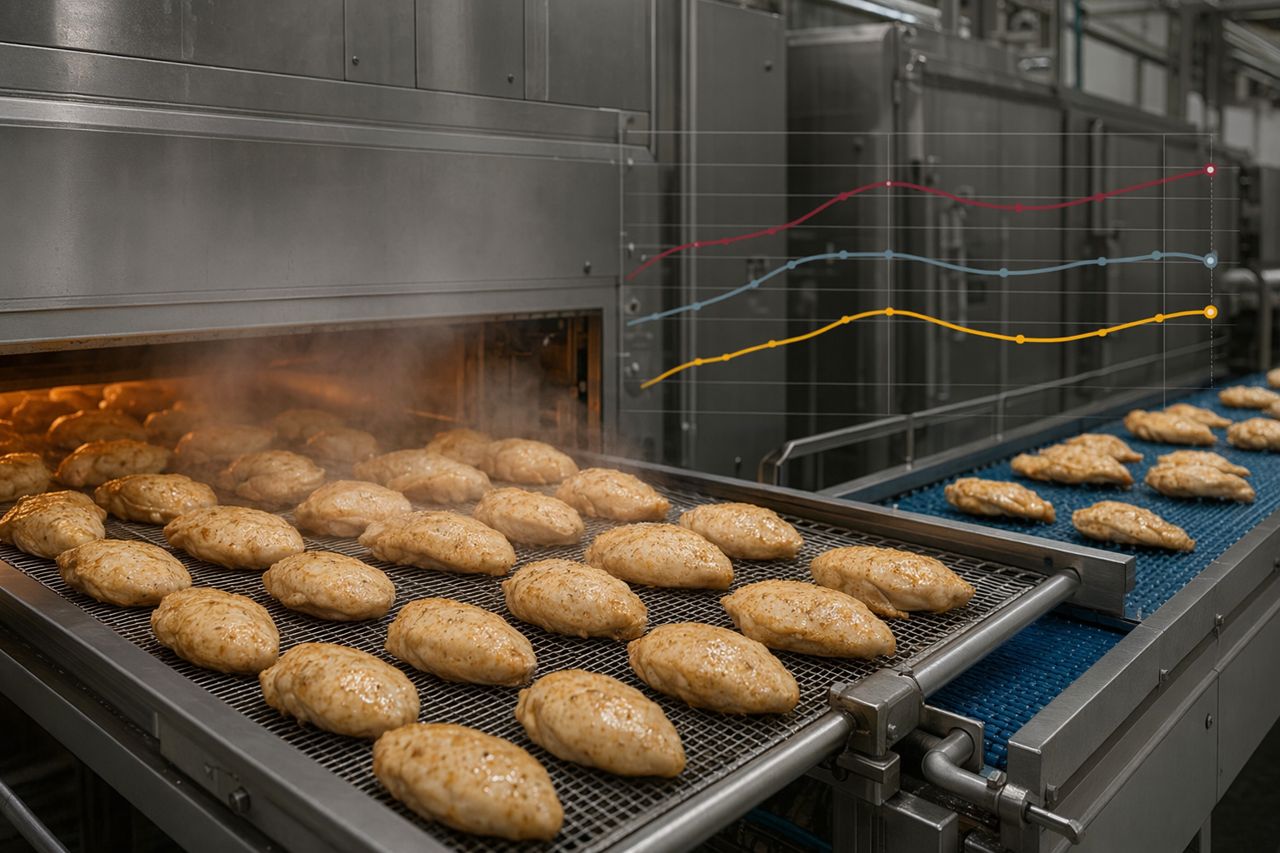
Cook exit weight and temperature
Pair final weight with validated internal temperature and cook program identity. Yield numbers without cook profile context are hard to compare. -
Post-chill weight and texture readout
Chilling can change apparent yield and bite. Pair final weights with sensory or instrumental texture checks aligned to the tenderness target.
Separate yield, tenderness, and texture risk
A strong validation trial does not chase one metric in isolation. Cook yield, tenderness, slice integrity, bite firmness, purge, color, and label constraints all interact.
For enzyme tenderizing, the key is controlled functionality. The process should help reduce tough bite variability without creating mushy texture, ragged slicing, or poor pack appearance.
A useful validation matrix may compare:
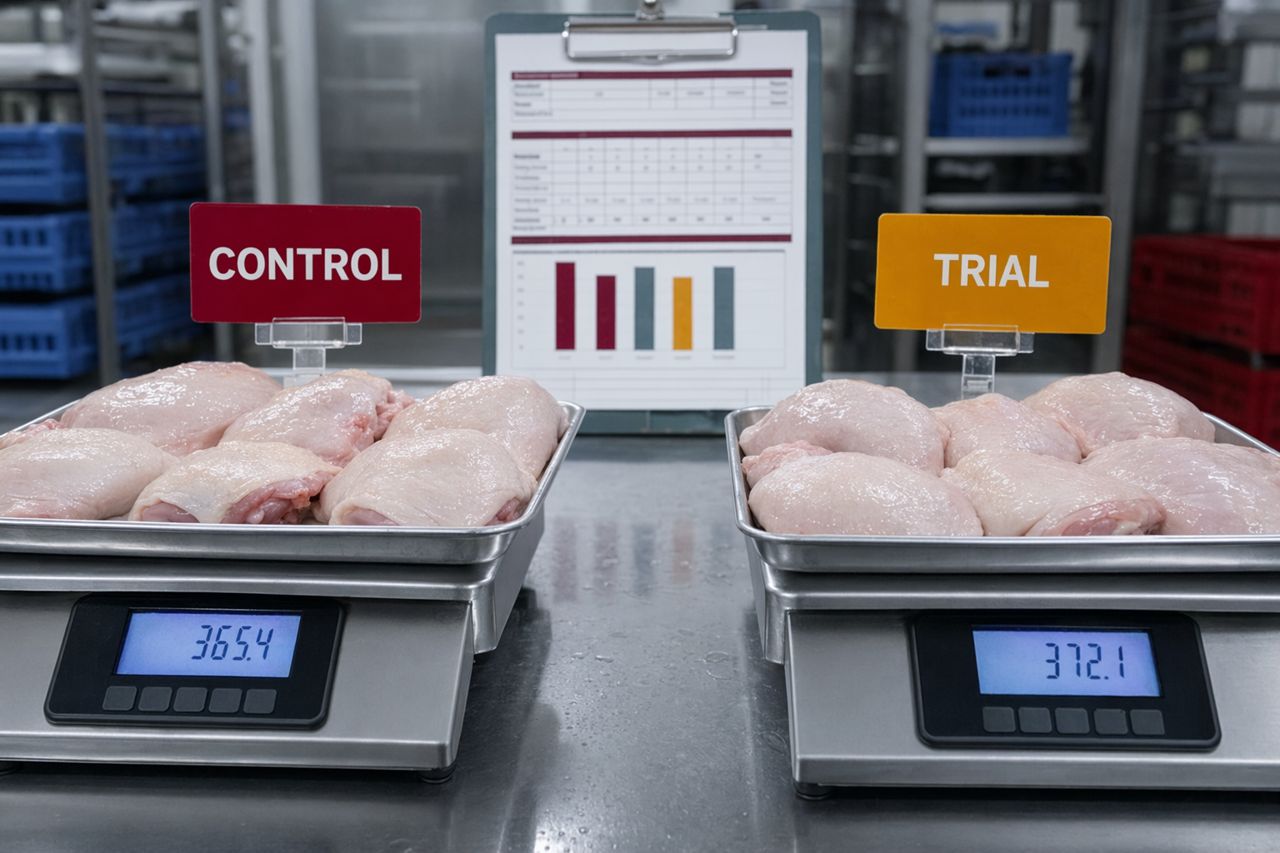
- Control formulation and current process
- Current formulation with adjusted mechanical conditions
- Enzyme-enabled formulation at the intended processing window
- Enzyme-enabled formulation under realistic hold-time boundaries
- Cook profiles that reflect normal production, not ideal lab conditions
The goal is not to win a perfect bench trial. The goal is to define a process window that survives plant reality.
What good cook yield data looks like
Plant teams do not need an overloaded database to make better decisions. They need clean, attributable records.
Minimum useful data set
- Product code and cut type
- Raw lot and production date
- Sample weight before injection
- Sample weight after injection
- Sample weight before cook
- Sample weight after cook and chill
- Marinade or brine formula version
- Enzyme program version where applicable
- Tumble conditions
- Cook program identity
- Internal temperature confirmation
- Texture target result
- Operator, shift, and line reference
Better data habits
- Keep control and trial samples paired by raw material lot
- Use the same sampling size and timing each run
- Record exceptions instead of cleaning them out later
- Separate first-hour startup data from steady-state production
- Flag belt loading, hold delays, or rework contact
- Compare distributions, not only averages
Average yield can look acceptable while variability is increasing. For commercial production, the spread matters. Wide variation creates customer complaints, case-weight surprises, and inconsistent eating quality.
Common failure points in yield trials
1. Pickup is measured, but retention is not
Injection pickup is not the same as cooked yield. A formulation can enter the muscle and still fail to retain moisture through tumble, cook, or chill. Track every stage.
2. Raw material variation hides the signal
Breast fillets, tenders, thighs, and portioned items do not behave the same way. Size bands, pH variation, prior freezing, and muscle condition can all shift results. Pair trials carefully.
3. Tenderness is improved beyond the intended bite
Tender is not always better. Many customers want a defined bite: less tough, still intact, clean slicing, and no pasty chew. Build the tenderness target before changing the process.
4. Cook profile is treated as fixed when it is drifting
Oven loading, humidity, belt speed, and setpoint recovery can shift during the day. If cook conditions move, the yield data moves with them.
5. Hold time is ignored
Enzyme-enabled systems need practical hold-time boundaries. Validation should include the shortest and longest realistic production intervals, not only the preferred condition.
Using cook yield data in enzyme tenderizing validation
A well-designed enzyme program should be evaluated as part of the complete formulation and process, not as a single additive decision.
FibreYield typically helps teams think through:
- Tenderness target definition by product and customer expectation
- Label and formulation considerations
- Marinade distribution and protein functionality
- Practical temperature and hold-time controls
- Side-by-side control design
- Scale-up from pilot batch to production line
- Finished-product checks for bite, slice, purge, and retained yield
This helps R&D and operations align before the first full-line trial. It also gives QA a clearer record of what changed, when it changed, and how the finished product responded.
Turning plant data into decisions
Cook yield data becomes valuable when it leads to a decision. After each trial, sort the findings into three groups.
Keep
Conditions that improved or protected yield while meeting tenderness and appearance targets.
Adjust
Variables that showed promise but need tighter control, such as tumble time, injection pressure, dwell time, product temperature, or cook loading.
Stop
Conditions that created over-tender texture, excessive purge, poor slicing, weak repeatability, or unacceptable process complexity.
This structure keeps validation practical. It prevents teams from carrying weak process options forward simply because one metric looked good.
A plant-ready path for poultry tenderizing work
For a poultry further-processing plant, the best tenderizing program is not the most dramatic. It is the one that gives a reliable bite, maintains commercial yield, fits the label strategy, and can be run by the production team on a normal shift.
FibreYield works with process and R&D teams to connect enzyme selection, formulation design, yield data capture, and scale-up support. The result is a clearer trial plan and a stronger basis for production decisions.
If you are reviewing tenderness variation, cook loss, or validation data for a poultry line, our team can help shape a practical process path.
Request a quote and tell us your product format, current process, target tenderness profile, and trial timeline.