Injection vs Vacuum Tumbling for Marinated Chicken Tenderness Consistency
For a poultry further-processing plant, tenderness is not a single formulation decision. It is the combined result of raw material variation, brine design, mechanical distribution, residence time, temperature control, and how protein responds before cooking. When teams look for an enzyme supplier for poultry meat tenderizing, the practical question is not only which enzyme to use. It is how the enzyme fits the plant's injection or tumbling process without creating texture drift, purge issues, or label complications.
Injection and vacuum tumbling can both deliver consistent marinated chicken tenderness, but they control the system in different ways. The right route depends on product format, line speed, yield target, sensory target, cook process, and how much process variation the plant can absorb.
The core difference: placement versus migration
Injection gives controlled placement
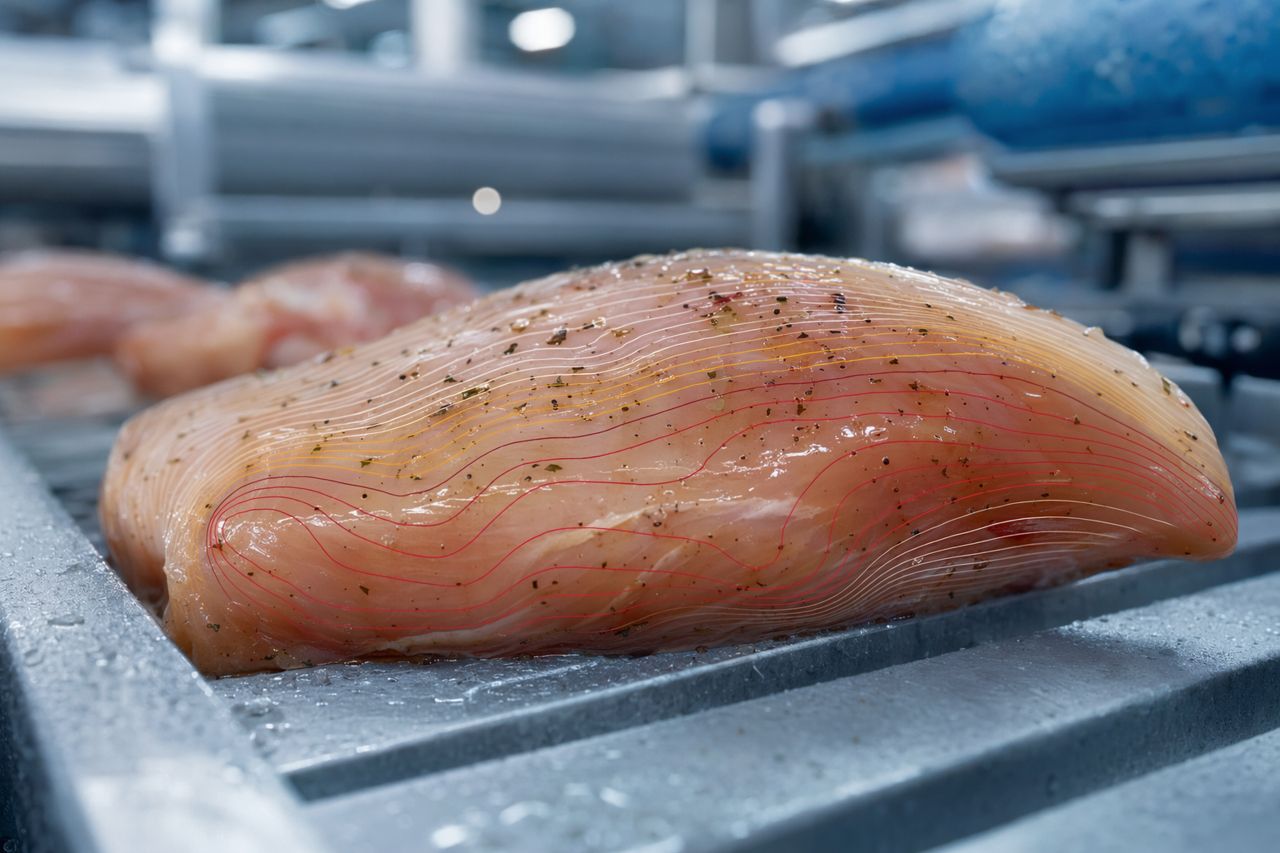
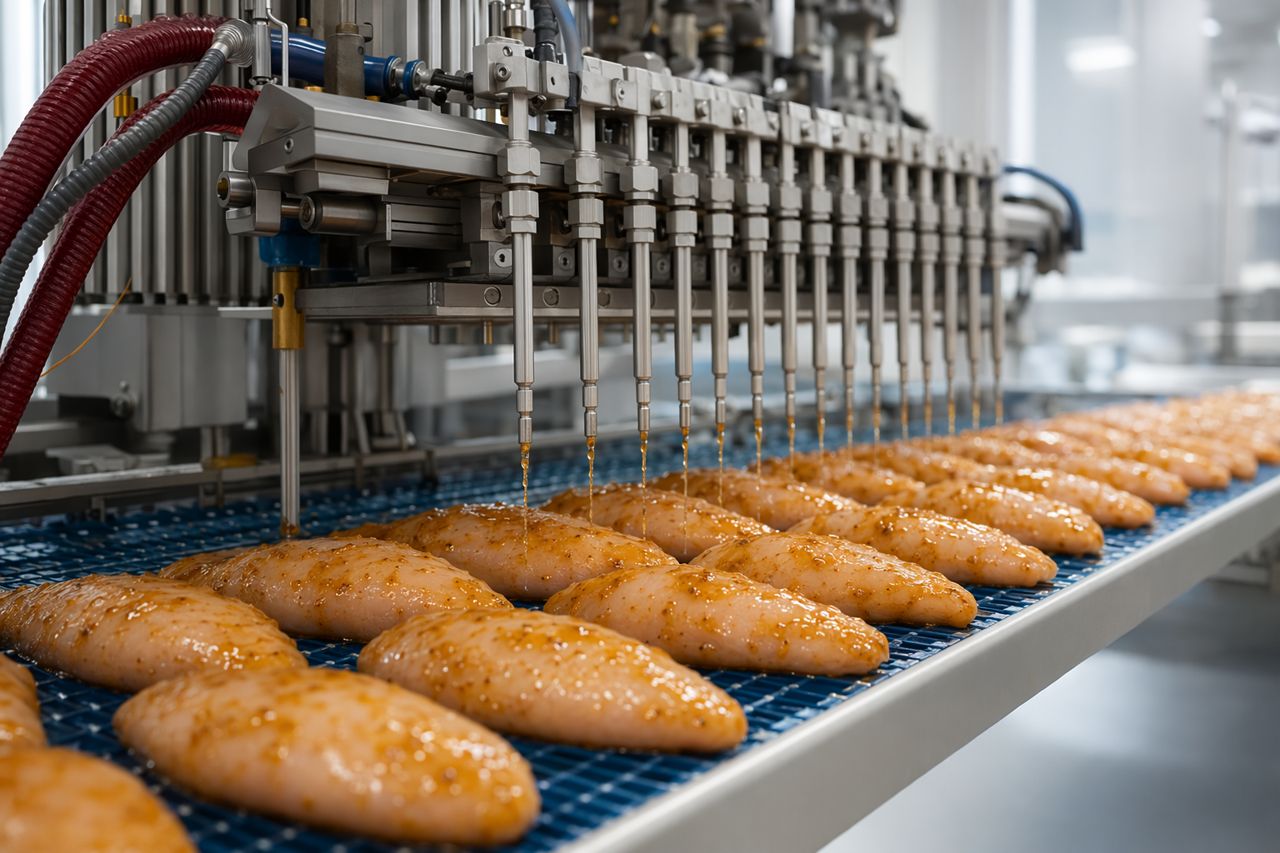
Injection moves marinade into the meat through a needle pattern. For whole-muscle breasts, fillets, strips, or portioned items, this gives the process team a defined starting point: target pickup, needle spacing, pump pressure, belt speed, and brine viscosity.
The value is distribution control. If the brine carries a controlled tenderizing enzyme system, injection can place that system where diffusion alone would be too slow or uneven. This is useful when the plant needs:
- Faster brine delivery into thick muscle
- Repeatable pickup across high-throughput lines
- Lower dependence on extended tumble time
- Better center-to-edge tenderness alignment
- More predictable validation data from run to run
The tradeoff is mechanical sensitivity. Excess pressure, poor needle maintenance, or inconsistent raw material temperature can produce streaking, surface damage, drip, or uneven cure. Enzyme-assisted injection needs formulation discipline and plant trials that check texture after the full process, not just after marinade pickup.
Vacuum tumbling gives progressive migration
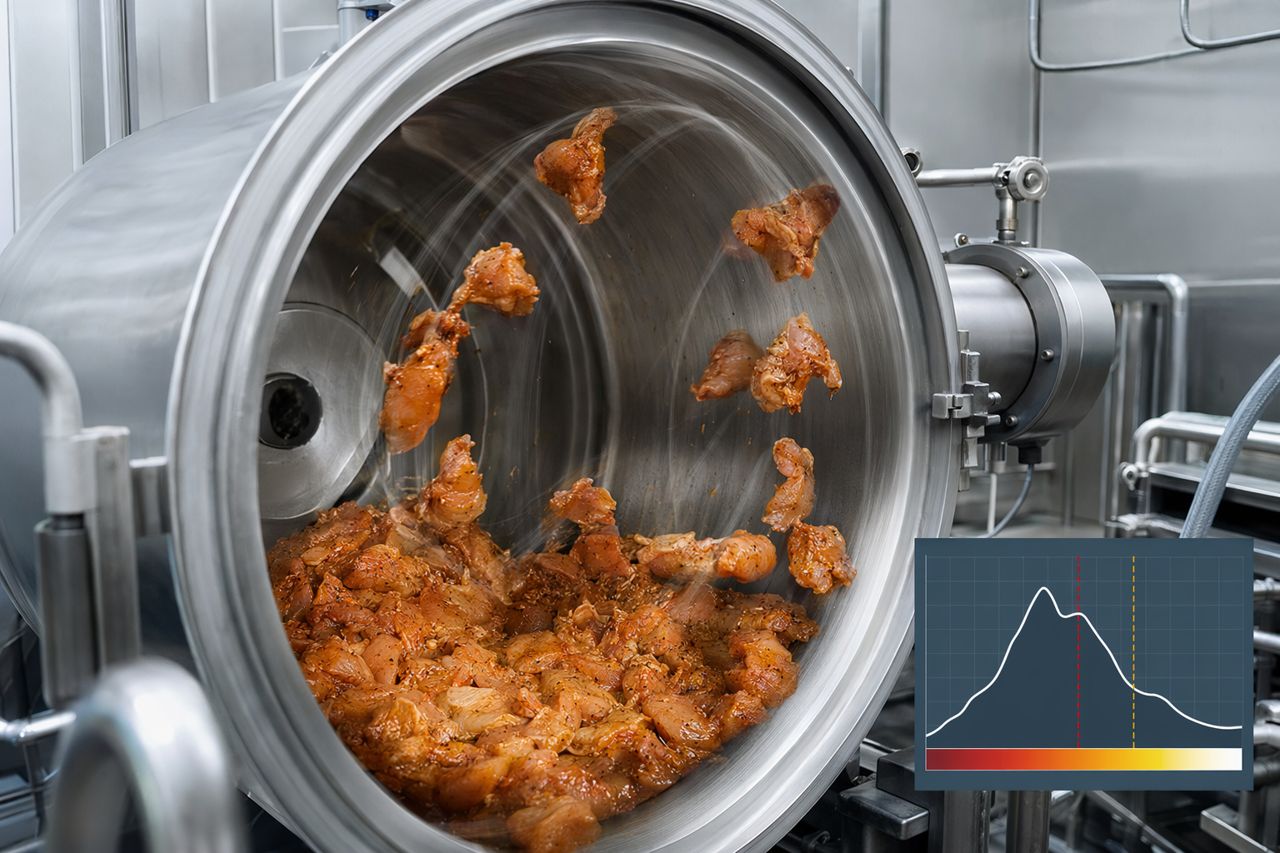
Vacuum tumbling uses pressure change and mechanical action to pull marinade into the muscle while massaging protein surfaces. It is often chosen for diced, sliced, boneless items, fajita strips, wings, and products where coating, surface hydration, or batch mixing behavior matters.
The value is progressive distribution and protein extraction. Tumbling can help brine, seasoning, and functional ingredients distribute through the batch while improving bind and mouthfeel. With enzyme tenderizing, the process window needs to be controlled so the desired tenderness develops without softening beyond specification.
Vacuum tumbling is often useful when the plant needs:
- Good batch uniformity across irregular pieces
- Improved marinade adherence and seasoning distribution
- Reduced mechanical needle impact on delicate formats
- Flexible batch development during R&D trials
- Better integration with chilled hold steps before forming or cooking
The tradeoff is time dependency. Tumble duration, load size, vacuum level, drum speed, temperature, and rest time can all change tenderness outcome. Enzyme systems in tumbling must be selected for a stable processing window, not just strong tenderizing potential.
How enzyme tenderizing changes the decision
Enzymes are not a shortcut around process control. They are a way to make texture development more intentional when matched to the right delivery method.
In poultry further-processing, FibreYield focuses on controlled protein modification: enough action to support tenderness and bite, without pushing the product toward mushy texture, edge breakdown, excessive purge, or inconsistent slice integrity. That means the enzyme choice, carrier system, dosage range, marinade pH, salt level, phosphate or phosphate-free approach, and thermal step must be evaluated together.
Key questions for R&D and process teams:
- Is the tenderness target based on sensory panel, shear force, texture profile, customer complaint reduction, or all three?
- Does the product need a clean bite, a softer bite, or improved juiciness without obvious tenderized texture?
- Will the enzyme be delivered by injection, tumbling, or a combined injection-plus-tumble process?
- What hold time exists between marination and cooking?
- Is the thermal process sufficient to lock the target texture at the right point?
- Are there label constraints around enzyme declaration, phosphate use, starch systems, or clean-label positioning?
Injection versus vacuum tumbling: where each method tends to win
| Decision factor | Injection advantage | Vacuum tumbling advantage |
|---|---|---|
| Thick whole-muscle pieces | Strong fit for internal placement and pickup control | Can work, but migration may require more time |
| Irregular strips or diced meat | Possible, but needle damage and sorting can be limiting | Strong fit for batch distribution and coating |
| Very high line speed | Strong fit when equipment is stable and maintained | Strong fit if batch scheduling supports residence time |
| Tight tenderness target | Strong fit for placement precision | Strong fit when tumble parameters are tightly controlled |
| Delicate texture risk | Requires careful pressure and enzyme selection | Requires careful time and temperature control |
| Label and formulation flexibility | Works well with targeted brine design | Works well with surface-active marinade systems |
| Scale-up from pilot trials | Needs needle pattern and pressure translation | Needs drum loading and motion translation |
Common failure modes to design out early
Over-tenderizing after a hold step
A product may look correct immediately after marination but drift softer during chilled holding. This is especially relevant when production schedules vary. A validation trial should include the longest realistic hold time, not just the ideal schedule.
Good pickup, poor tenderness uniformity
Pickup data can look clean while texture data remains scattered. This usually points to distribution, raw material variability, or enzyme access within the muscle structure. Injection pattern, tumble load, brine viscosity, and temperature should be reviewed together.
Surface softening without internal improvement
This can occur when the tenderizing effect is concentrated near the surface. In injection, check needle performance and brine flow. In tumbling, check residence time, piece size, and marinade contact. The goal is a consistent bite, not a soft exterior masking a firm center.
Tenderness target achieved, yield lost
A tender product that loses purge or cook yield may not be commercially viable. Enzyme selection should be evaluated alongside water-holding strategy, salt level, protein extraction, cook profile, and packaging format.
Practical validation plan for a plant trial
A useful plant trial is narrow enough to diagnose and realistic enough to scale. FibreYield typically recommends a staged approach:
- Define the commercial texture target and rejection limits before trial work begins.
- Select the delivery route: injection, vacuum tumbling, or combined processing.
- Lock raw material variables as much as possible: supplier, size band, temperature, and trim standard.
- Run a control batch using the current marinade and process.
- Run enzyme-assisted variants with only one or two formulation variables changed at a time.
- Measure pickup, purge, cook yield, slicing integrity, and sensory tenderness.
- Include chilled hold conditions that match real production scheduling.
- Confirm the result at production scale, not only in benchtop or pilot equipment.
This approach helps teams avoid the common trap of choosing the most aggressive tenderizing condition in R&D and then fighting variation on the plant floor.
When a combined process makes sense
Some plants use injection for placement followed by short vacuum tumbling for distribution, surface hydration, or seasoning uniformity. This can be effective for whole-muscle marinated chicken where the product must hit a defined pickup target and still show even eating quality.
The combined route can improve repeatability, but it also adds more variables. If the enzyme system is too fast or the tumble step is too aggressive, the plant may see surface breakdown or softness after holding. The formulation should be built for the full process path, including the time between injection, tumbling, packing, and cooking.
What to ask an enzyme supplier
A supplier should be able to support more than a sample shipment. For poultry further-processing, ask for:
- Application guidance for injection and vacuum tumbling conditions
- Tenderness target translation from sensory language to trial design
- Support for phosphate and phosphate-free marinade systems
- Guidance on pH, salt, temperature, hold time, and thermal stabilization
- Scale-up support from pilot trials to production equipment
- Documentation aligned with your ingredient, allergen, and label review process
- Troubleshooting for purge, bite, sliceability, and batch repeatability
FibreYield works with R&D, QA, and operations teams to select enzyme systems around the real process window. The objective is not maximum tenderization. The objective is controlled tenderness that survives normal plant variation.
Bottom line
Injection is usually the stronger route when internal placement, defined pickup, and high-speed repeatability are the priority. Vacuum tumbling is usually stronger when batch distribution, surface functionality, irregular pieces, and flexible marinade integration matter most.
For enzyme-assisted poultry tenderizing, the best choice is the one that gives your plant a stable texture window: tender enough to meet the customer target, controlled enough to protect yield, and repeatable enough to run at scale.
Planning a tenderness validation trial?
FibreYield can help evaluate whether injection, vacuum tumbling, or a combined route is the better process path for your marinated chicken product. Share your product format, current process, tenderness target, label constraints, and scale-up timeline.
Request a quote for an on-site form response from the FibreYield team.